The pottery collection ranges from plain, utilitarian Wanka ceramics to fine Wari wares and vessels from the Inka and colonial periods. Many pieces show two cultures merging: the Wari were present in the Mantaro Valley for about 200 years.
Wanka pottery
Wanka pottery was mainly utilitarian: single-colored, with very little relief. What sets it apart are its faces, modeled by hand rather than pressed from molds. As a result, no two faces are alike.


Anthropomorphic pottery
he faces depict masks, moments from daily life, and physical conditions, such as wishpas with twisted mouths, or people with goiter caused by a lack of iodine in salt. Most have very small, narrow eyes. Some represent huacones. The huacón is the masked figure of the Huaconada of Mito, in the Mantaro Valley: it embodies the former council of elders, and its mask, with its prominent nose, evokes the beak of the condor. Reciprocity and harmony are the core of the Andean worldview, and the huacón was the harmonizer: not a judge, but the one who restored balance, because nothing was entirely bad or entirely good.
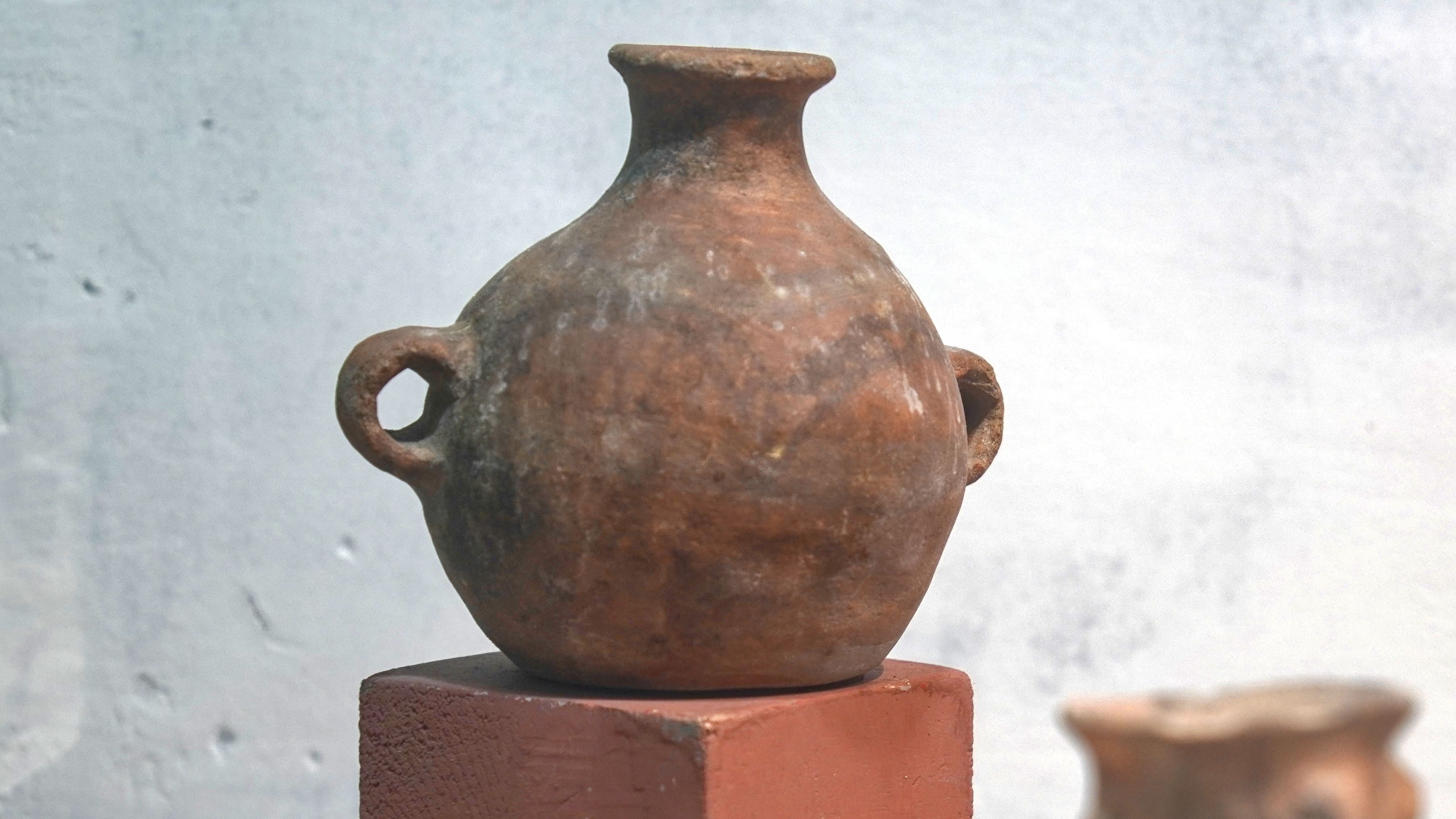
Utilitarian vessel
A utilitarian vessel. Like most Wanka pottery, it was made for everyday use rather than decoration.
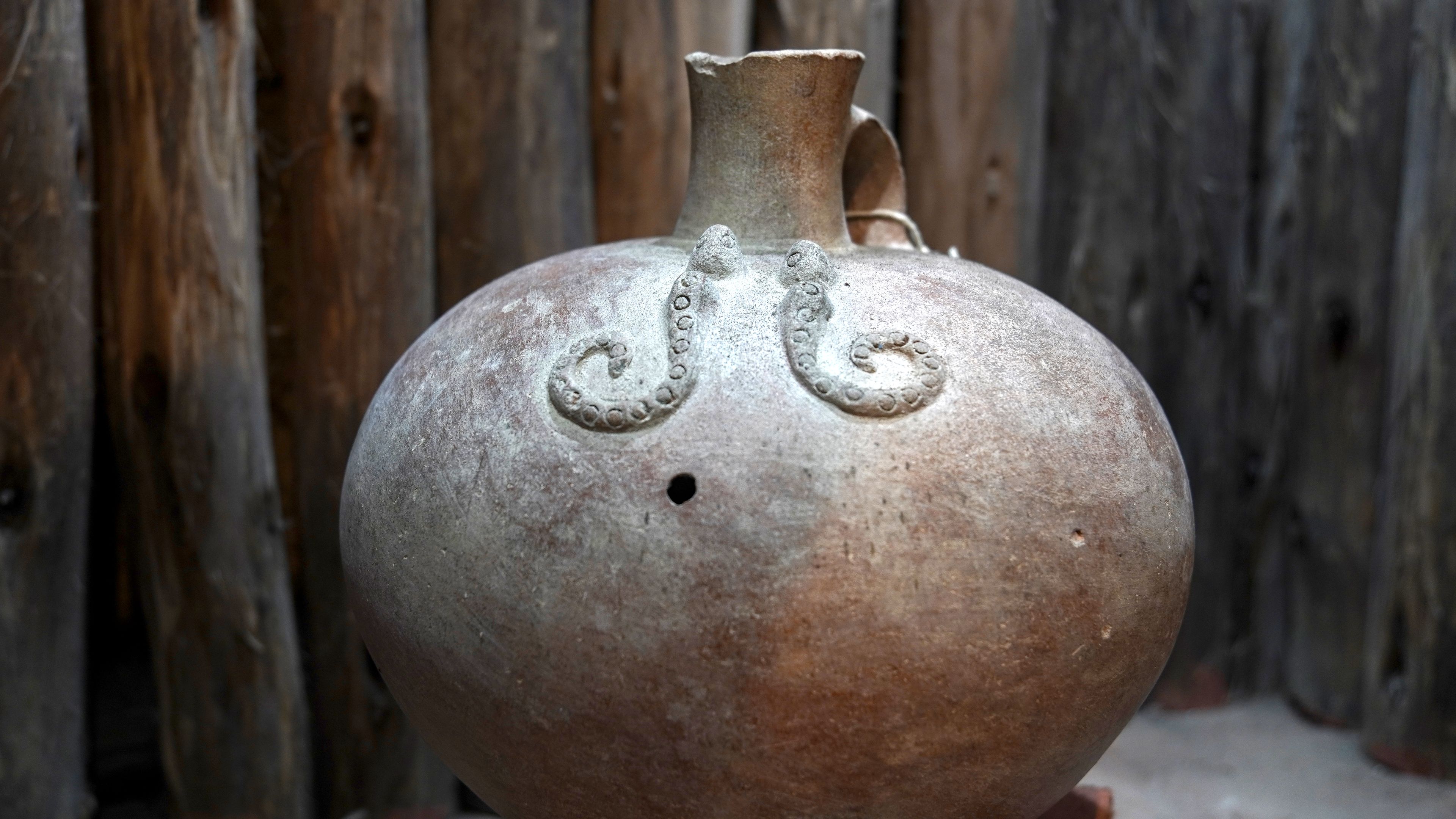
Zoomorphic vessel
A vessel decorated with two snakes in relief. It is an unusual piece, since Wanka pottery rarely featured relief.


Wari-Wanka potsherds
These fragments show the meeting of Wari culture and Wanka art. Many bear faces with the shape and rough finish of a Wanka piece, combined with Wari design elements. This blend is common in the valley.
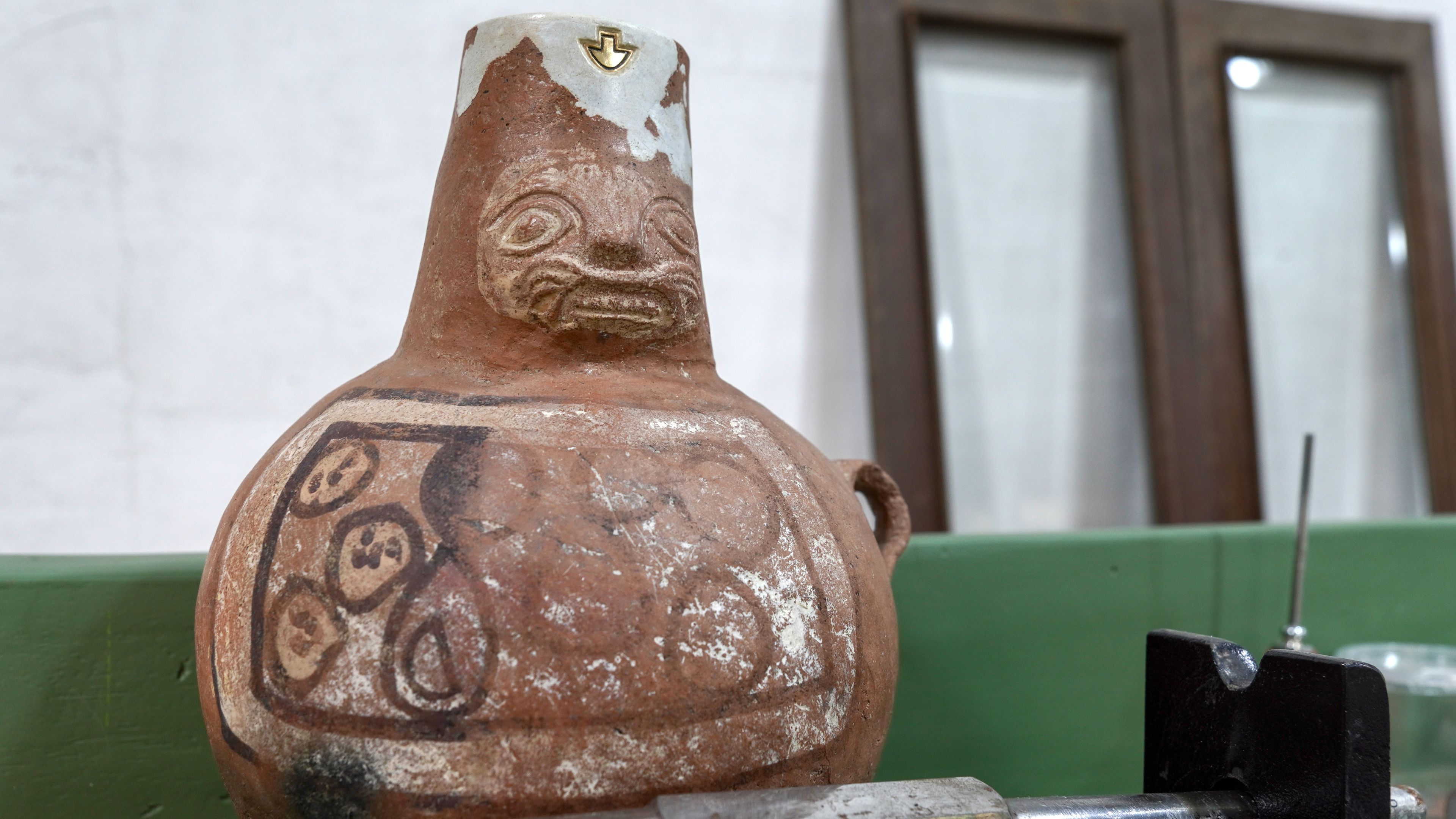
Wanka vessel with a Wari face
This piece follows the style and design of Wanka pottery, but its human-like face is clearly Wari, which makes this piece an example of Wari-Wanka fusion.
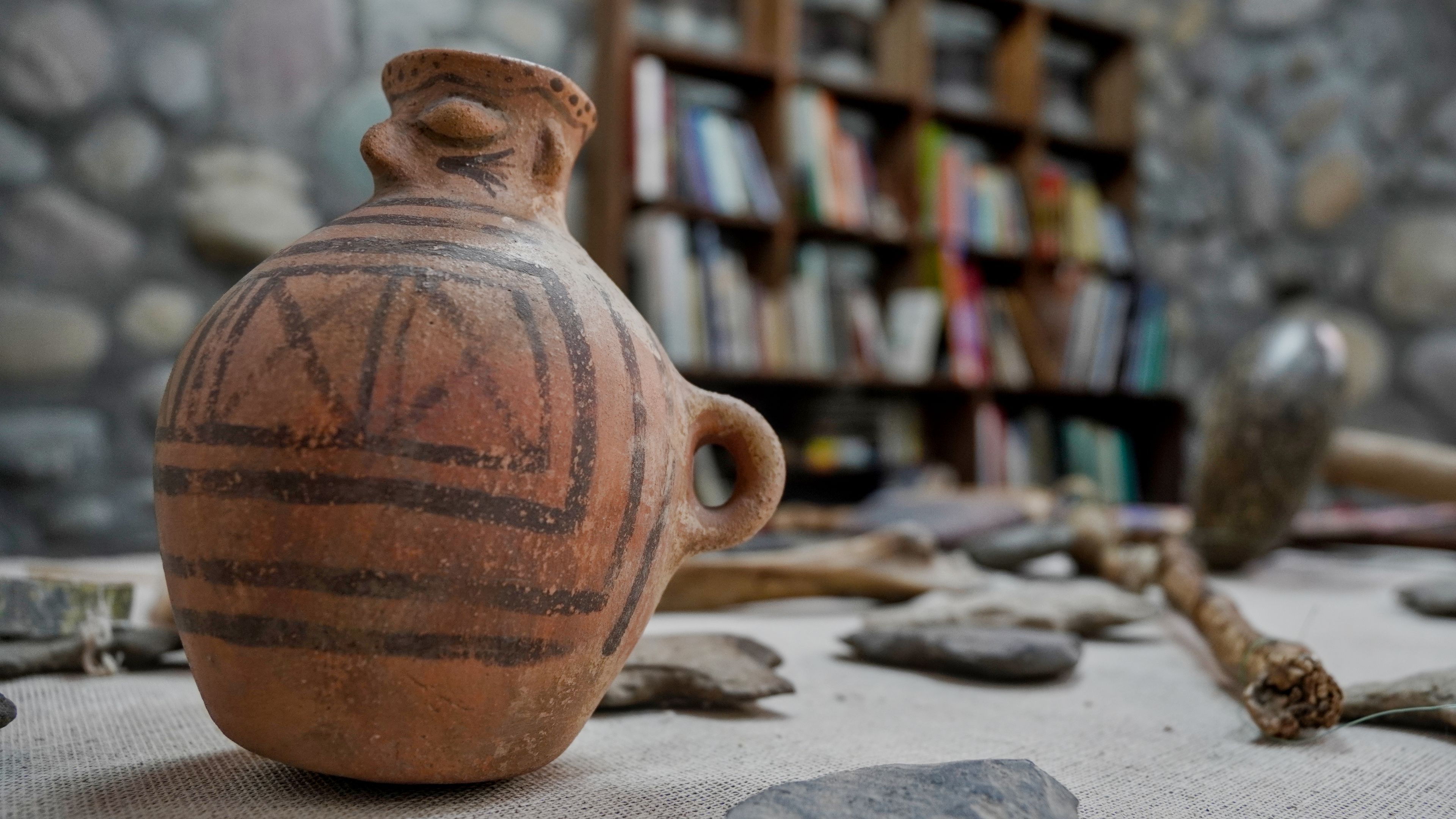
Decorated anthropomorphic vessel
An old piece, typical of Wanka pottery in its simple craftsmanship.
Wari pottery
The Wari, a foundational Andean culture, had a remarkable iconography and color palette. Their pottery has fine, delicate finishes: it was utilitarian but also artistic, and includes decorative pieces. Among the Wanka, by contrast, decoration belonged to textiles, and pottery was mainly utilitarian.


Wari vessels
Some of these vessels are so thin it is hard to imagine how they were used every day. One, shaped like a canteen, is extraordinarily fine, yet it was carried around and served its purpose.

A Wari piece made by a Wanka potter
This piece has Wari form, colors, and design, but not the Wari finish: it is thick and rough. Whoever made it was surely a Wanka potter. It is another example of the two cultures coming together.

Wari figurine
A little doll: a children's toy, purely Wari. Although its colors have faded, its tiny hands and feet are still intact.

Round anthropomorphic vessel
A round-bodied Wari vessel whose neck forms the head of a figure with almond-shaped eyes, a prominent nose, and a headdress. This type of vessel, known as a face-neck jar, is characteristic of Wari ceramics.
Storage vessels
Large vessels for storing liquids and food, most of them from the colonial period.


Jars and urpus
Vessels of different sizes. The narrow-mouthed ones, called porongos, held liquids such as water or chicha. Those used for chicha have a hole that was plugged with a corncob to keep them from bursting: chicha de jora ferments the longer it is stored and needs a way to release the pressure. The wide-mouthed vessels are urpus, which were used to store grain. In the Andean world, however, foods such as potatoes were not kept in vessels but in buildings made for the purpose. Many of these vessels were made in Aco, a district in the province of Concepción known for its centuries-old tradition of artisanal ceramics.

